
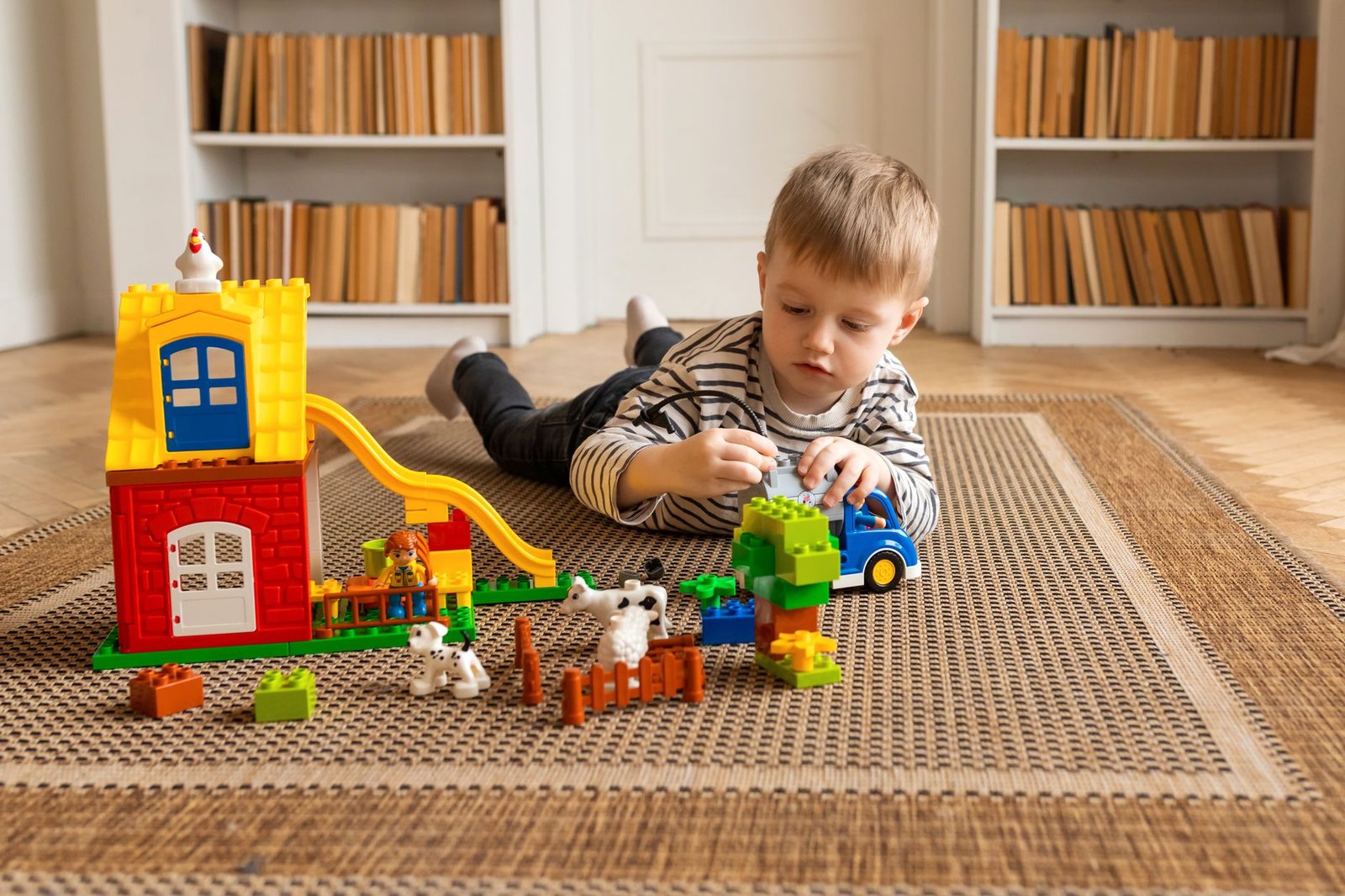


Children can be unable to express themselves using words. They lack the verbal and cognitive skills required to fully express themselves and talk about issues that they face. It can be more difficult if the child is experiencing a trauma or mental health condition.
Feelings such as grief or anger are complex. A child may not be able to process the feelings and related thoughts, making it difficult for them to deal with the issues. This is where play therapy comes in. It can help children learn how to deal with mental issues that are causing them distress. Play allows them to act out scenes that are similar to what they may be facing, work on addressing particular issues or even develop characters with similar emotions or feelings as theirs. It is a hands-on therapy.
Children can use toys to express their feelings. For example, a child who has lost a parent or a sibling can use puppets to portray a character that misses a friend and feels sad. A dolls’ house can feature a child beneath their bed, hiding from parents who are fighting, to help a child that has experienced domestic violence.
A therapist can help during play to solve a problem based on the type of approach that is being implemented. The therapist can also simply observe how the child helps the toy character to overcome its emotions.
You will learn
- The meaning of play therapy; what it is and what is involved
- About the types of play therapy
- When to use play therapy
- The tools and approaches that are often used in play therapy
- How play therapy works
- The benefits of play therapy
- The qualities of a good therapist
Explore our full library of training courses.
Course content
1 module · 0.75 hours of learning
- Module 01: Play Therapy (includes quiz)
- Module 01: Play Therapy (video)




Reviews
There are no reviews yet.